


Five-part series
Understanding Parkinson's Disease
Part 1: Hand tremors and difficulty moving. How is Parkinson's disease diagnosed?
Having a hand tremor. Moving more slowly. Feeling stiffness in your body. When noticing these changes, many people wonder, "Is it just old age?" or "Could it be Parkinson's disease?"
To diagnose Parkinson's disease, a doctor will evaluate your symptoms during an examination while ruling out other conditions that cause similar symptoms. In this process, test results are not the only clues. What specific difficulties you face in your daily life is, in itself, crucial information for your doctor.
What changes in movement occur?
There are three core symptoms: resting tremor, bradykinesia (slowness of movement), and rigidity (muscle stiffness).
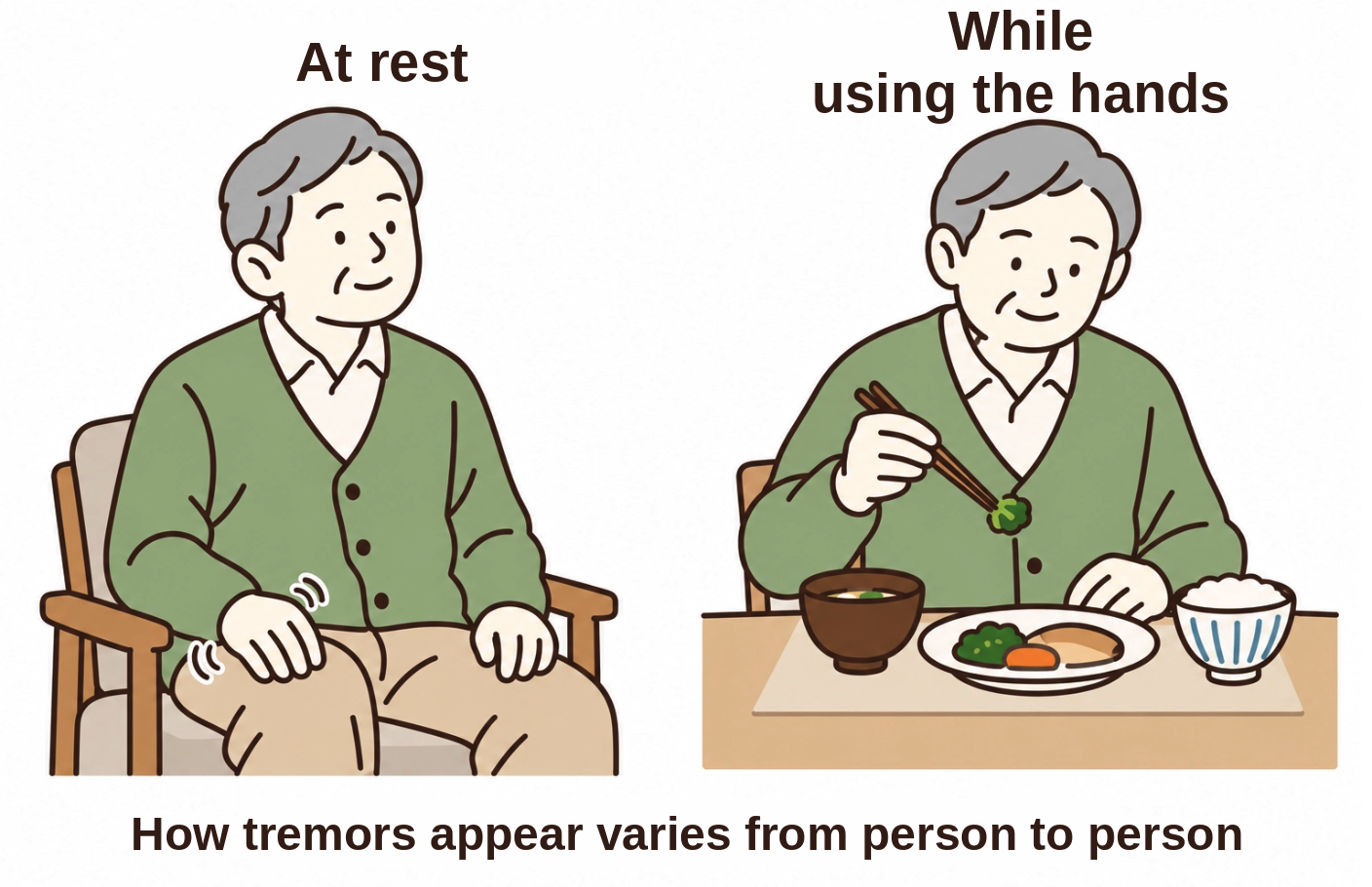
Resting tremor refers to a shaking that happens when you are still. The tremor often becomes less noticeable when you use your hand, but you notice it when you are resting.
However, tremors manifest differently in everyone. You cannot make a self-diagnosis based solely on whether you have this specific characteristic.
Bradykinesia means movements become slower.
Rigidity means muscles become stiff.
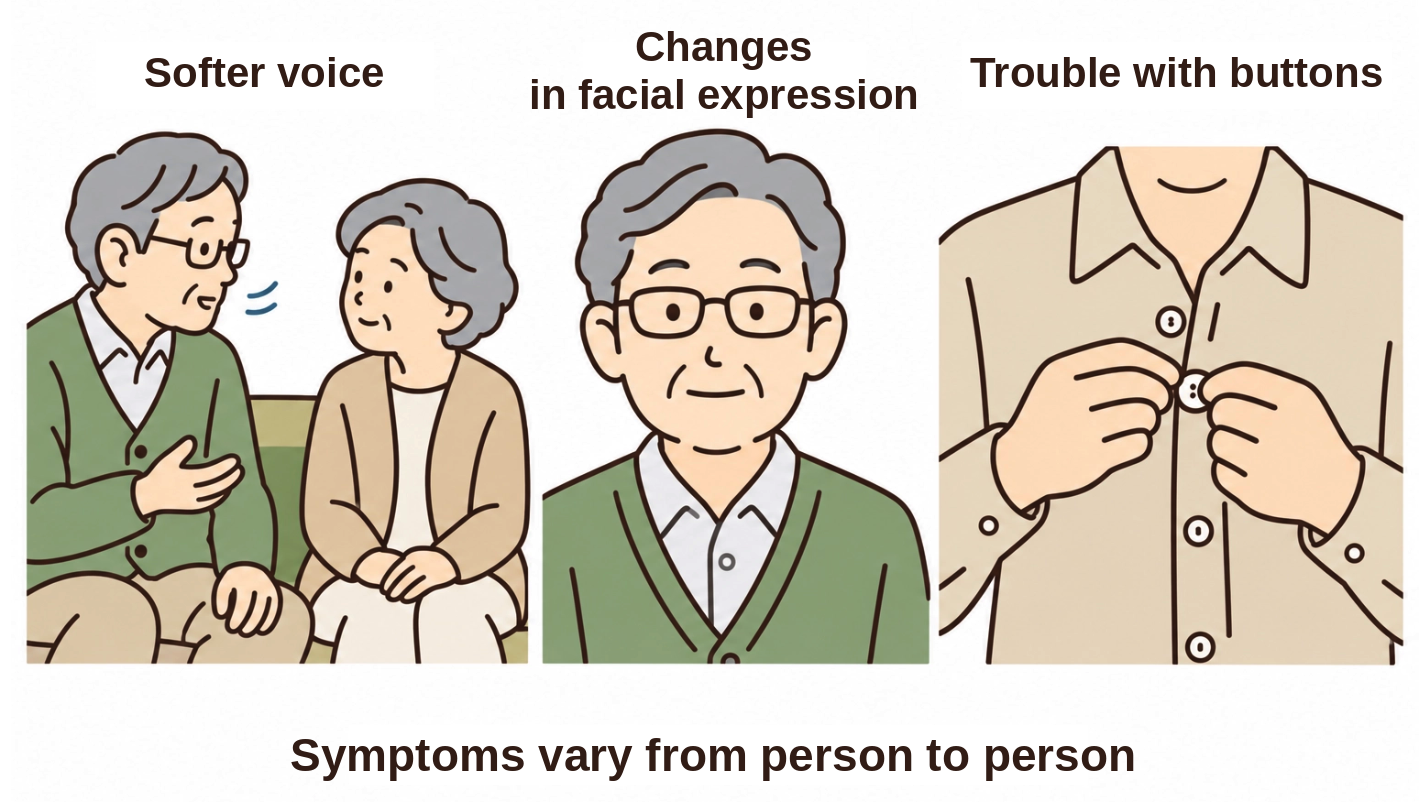
Other signs include a quiet voice, changes in facial expressions, or finding it hard to button a shirt. Depending on how the disease progresses, you may also experience difficulty maintaining your balance.
Clues in symptom asymmetry and onset
Symptoms often start prominently on one side of the body, or begin subtly and progress slowly. Small details like "it started in my right hand first" or "before I knew it, getting dressed started taking longer" are highly valuable. Please share these minor observations with your doctor during your visit.
Distinguishing similar conditions
Conditions with symptoms similar to Parkinson's disease are referred to as "Atypical parkinsonism" or "Parkinsonian syndrome."
The underlying causes can include:
- Multiple system atrophy (MSA)
- Progressive supranuclear palsy (PSP)
- Corticobasal degeneration (CBD)
- Normal pressure hydrocephalus (NPH)
- Multiple cerebral infarctions (vascular parkinsonism)
- Side effects of certain medications
Rather than looking at this list of diseases and trying to fit yourself into one, it is more important to understand that similar symptoms can stem from many different causes.
What do MRIs and specialized imaging tests look for?
An MRI is a helpful scan used to check for other conditions that might cause similar symptoms. However, even if an MRI shows no obvious abnormalities, it does not mean your disease is not real.
Other diagnostic tools include imaging scans that evaluate dopamine neurons in the brain, as well as an MIBG myocardial scintigraphy. The MIBG scan helps assist the diagnosis by assessing the condition of the sympathetic nerves of the heart.
No single test can determine a diagnosis on its own. A doctor makes the final evaluation by combining these test results with your symptoms and physical exam findings.
Questions to ask during your appointment
Do not hesitate to ask your doctor questions that are on your mind, such as:
- "What will this test show?"
- "How do these results relate to my symptoms?"
Before your visit, making a quick note of when your changes started, which side of your body is affected, and in what situations they happen will make it much easier to communicate clearly with your doctor.
